



Do solar panels improve EPC rating? Yes — and often by more than people expect
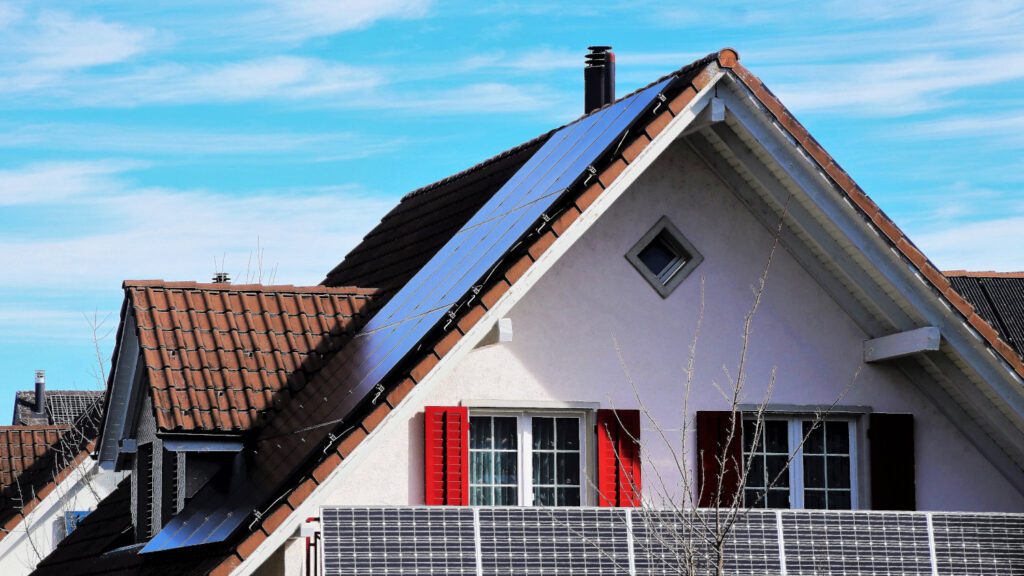
Solar panels are one of the most effective ways to improve an EPC rating. Because an EPC is based on how much energy a home uses and what it costs to run, generating your own electricity on the roof reduces the energy the property draws from the grid — and that feeds straight into a better score. For many homes, solar is the measure that lifts a property up a band, such as from a D to a C. As a Kent EPC assessment team, it’s one of the improvements we model most often.
But there’s an important detail that most guides skip over, and it’s the difference between a rough estimate and getting the full, accurate benefit on your certificate. It comes down to how the solar system is modelled in the assessment.
Talk to us first — before you install
Before you commit to solar, have a conversation with us about your EPC. We can look up your existing certificate , even an old or inaccurate one is a useful starting point for the discussion and talk through what solar could realistically do for your rating, and the most accurate way to model it. It costs nothing to ask, and it means you make the decision with the real picture.
We work with trusted local and national installers who are accredited to deliver work under the government’s energy schemes. That matters: grant funding and the reduced VAT rate on solar generally require an accredited installer, so where you’re eligible, the installers we rate can carry out the work properly and access the support you’re entitled to. Grant availability and eligibility vary by scheme and circumstances — you can check the latest position on the government’s Warm Homes guidance — so the sensible first step is a chat with us, and we’ll point you the right way.
Solar grants and funding — what’s actually available
There’s a lot of noise about “free solar,” so here’s the honest position for solar specifically, as things stand. What you can access depends on your circumstances:
Every one of these is installer-led — the grant or VAT saving is applied through the installation, which is why using an MCS-certified installer matters. Eligibility and scheme dates change, so rather than guess, the sensible first step is a conversation with us about your EPC and what you’re trying to achieve — we’ll explain what’s realistic for your property and point you towards an accredited installer who can access the right support.
How much does solar add to an EPC rating?
You’ll see a lot of blanket figures online — “up to 15 points,” “9 to 10 points,” and so on. The honest answer is that there isn’t a fixed number, because an EPC isn’t a simple points-based system. The final score is expressed as a number and a letter, but the calculation behind it is more involved, and the effect of solar depends on your specific property — its size, roof orientation, pitch, and the size of the system installed.
What we can tell you, as Kent EPC assessors who model this every day, is that the impact can be significant and crucially, how accurately the system is entered into the assessment makes a real difference to the result. That’s where our expertise comes in.
The detail that gets you the full benefit – accurate system data
Here’s something most homeowners never hear. When an assessor models solar panels, there are two ways to do it:
The catch is that most homeowners don’t have that system data to hand, so their EPC ends up using the conservative default — and they may be leaving legitimate points on the table. This isn’t about inflating anything; it’s about modelling the system accurately rather than under-representing it.
To show the kind of difference this can make, we modelled solar on one of our standard test properties — a detached 1960s cavity-wall house of around 80 square metres per floor. We found that including PV using a percentage roof covering fell significantly short when entering system specific information as described above. This is due to RDSAP defaulting to conservative values of electrical generation when most homes likely have systems that generate higher amounts of electricity. RDSAP would assess this as a reduction of the running costs of the property and increase the EPC rating accordingly.
Every property is different, so the figures for your home will differ — but the principle holds: accurate system data can capture more of solar’s real benefit than the conservative default. Working with us and an installer we recommend will ensure we obtain the correct information to maximise your EPC score.
How we help you get the most accurate result
This is where using an installer we recommend pays off. When you go through an installer we rate, we can obtain the full system specification — capacity, pitch and orientation — and use it to model your EPC accurately, so your certificate reflects the true benefit of the system rather than a cautious estimate.
It’s part of a simple, accurate process: we assess your home as it stands (a draft EPC gives an accurate baseline), model what solar would be likely to add, point you towards a trusted installer, then revisit once the panels are in — using the real system data — to complete and lodge your updated EPC. Two visits, an accurate result, and the full legitimate benefit captured.
Solar, batteries and the road to 2030
For landlords especially, solar is worth understanding in the context of the changing rules. The minimum EPC standard for rented homes is set to rise to band C by 2030, and the methodology behind EPCs is evolving too. Solar sits well on both counts: it helps under the current system, and it aligns with the direction the new rules are heading, where on-site renewable generation and smart-readiness matter. Pairing solar with battery storage strengthens this further — and the electricity you export can earn payments through the Smart Export Guarantee.
The honest bottom line
Solar panels genuinely improve most EPC ratings, and for many homes they’re the measure that reaches band C. But the benefit you actually see on your certificate depends on the panels being modelled accurately. We don’t sell solar — we’re a Kent EPC assessment team — so our only interest is getting your rating right. If you’re considering solar, talk to us first: we can model the likely benefit for your property, point you towards installers we rate, and make sure the full, accurate result ends up on your EPC.
Call us on 01304 626457, request a draft EPC for an accurate baseline, or get in touch to be pointed towards a trusted installer.