



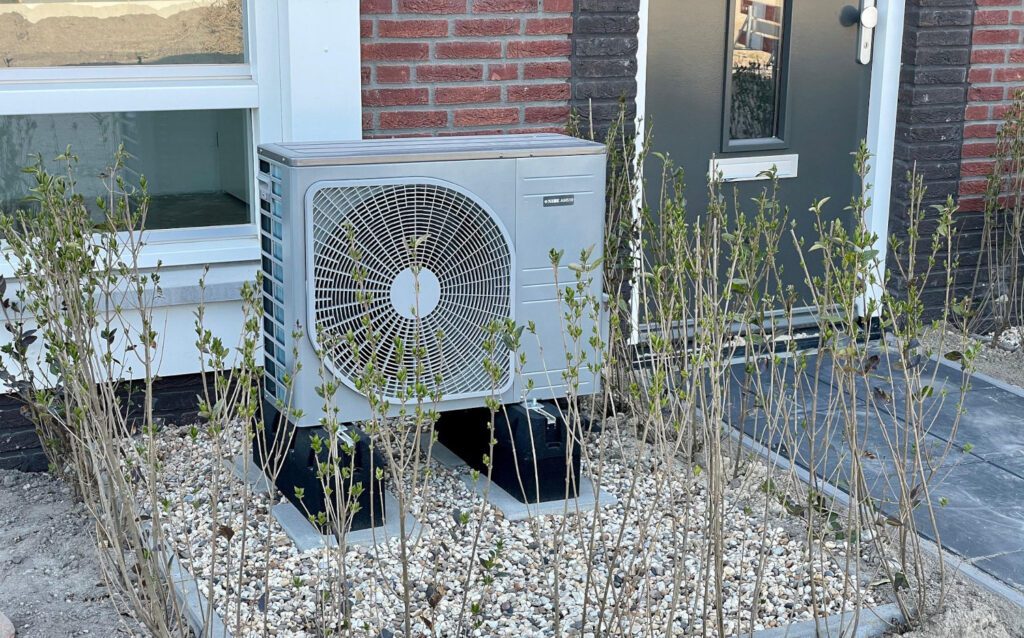
Do heat pumps improve EPC rating? The honest answer is – it depends
You’d expect a heat pump — one of the most efficient, low-carbon ways to heat a home — to improve an EPC rating. Often, it doesn’t. In some cases it can even lower it. That surprises people, so it’s worth explaining properly, because it could save you an expensive mistake. As a Kent EPC assessment team, this is one of the questions we’re asked most, and we’d always rather give you the honest picture than the one that sells an installation.
The short version: under today’s EPC rules, a heat pump on its own frequently doesn’t raise the rating — but the rules are changing, and the future direction makes low-carbon heating far more important. Here’s what that means for you.
Why a heat pump often doesn’t improve the current EPC
The reason comes down to how an EPC is calculated. The current rating is based largely on running costs — how much it costs to heat and power the home. And here’s the catch: electricity is much more expensive per unit than mains gas. When you replace an efficient gas boiler with a heat pump, even though the heat pump is far more efficient and much greener, the assessment sees a home running on more expensive energy — and the cost-based score can stay flat or even drop.
Oddly, the EPC will often describe the heat pump’s efficiency as “very good” in the recommendations, while the headline rating doesn’t move. That’s not a mistake — it’s the difference between how efficient the system is and how much it costs to run under the current methodology.
When a heat pump DOES improve the rating
It’s not one-size-fits-all. A heat pump is more likely to improve your EPC when it replaces something worse than mains gas. If your home currently runs on:
A heat pump can genuinely lift the rating, because you’re moving away from a high-cost or inefficient system. Heat pumps also perform best in a well-insulated home, so pairing one with good insulation improves both the comfort and the numbers. And crucially, a heat pump combined with solar PV is a strong combination — the solar helps the rating under the current rules and offsets the running cost of the electricity the heat pump uses.
Why heat pumps matter for the future: the rules are changing
Here’s the part that changes the whole picture. The way EPCs are calculated is being reformed, and the direction of travel makes low-carbon heating far more important than it is today.
The government has proposed a new methodology (the Home Energy Model) and a tightening of the minimum standards. Under the proposals, a home’s heating system will be assessed in a way that reflects carbon, not just cost — and it has been stated that a property relying on a fossil-fuel heating system, such as a gas boiler, would not be able to reach the top bands on the heating side of the assessment. In other words, the current situation, where a gas boiler can out-score a heat pump, is expected to reverse.
It’s important to be clear: this is proposed and not yet law, and much of the detail is still being finalised. But the direction is set. For anyone planning for the long term — landlords especially, with the minimum standard rising to EPC band C by 2030 — a heat pump is increasingly the heating route that aligns with where the rules are heading, even if it doesn’t boost today’s cost-based score.
The £7,500 Boiler Upgrade Scheme grant
If a heat pump is right for your home, there’s significant government support available. The Boiler Upgrade Scheme (BUS) offers a grant towards the cost of an air source or ground source heat pump, and it’s not means-tested — any eligible homeowner in England or Wales can apply, including landlords. The grant is applied as a discount on your installation, and it’s paid through an accredited installer.
As with all these schemes, the grant is installer-led and requires an MCS-certified installer — and we only refer to installers who are MCS-certified. That accreditation is what makes the grant and the reduced VAT accessible, and it protects the quality and warranty of the work. Get in touch to discuss your EPC and local MCS installers.
Talk to us first — before you commit
Because a heat pump’s effect on your EPC depends so heavily on your specific property and what it’s replacing, this is exactly the kind of decision worth a conversation before you spend money. We can look up your existing EPC — even an old or inaccurate one is a useful starting point — and model honestly what a heat pump would be likely to do for your rating, both under the current rules and with the coming changes in mind.
It’s part of a simple, accurate process: we assess your home as it stands (a draft EPC gives an accurate baseline), model the options honestly, and — if a heat pump makes sense — point you towards an MCS-certified installer we rate who can access the grant. We don’t sell heat pumps, so our only interest is giving you the true picture.
Weighing up a heat pump
A heat pump is an excellent, efficient, low-carbon way to heat a home — but whether it improves your EPC today depends entirely on your property and what it replaces. Under current rules it often won’t move the rating; under the rules that are coming, low-carbon heating becomes far more important. If you’re weighing one up, talk to us first: we’ll model it honestly for your home, factor in the £7,500 grant, and make sure you decide with the real picture rather than a sales pitch.
We cover homes across East Kent. Call us on 01304 626457, request a draft EPC for an accurate baseline, or get in touch to talk through what a heat pump could mean for your rating.